Senior Design Director | August 17, 2022
Finding and Managing Local Partners for International Lanter

Zhang Lei
Senior Design Director
Strategies for finding and managing local partners for international lantern festival projects including vendor selection and quality oversight.
Introduction
In today's competitive event and lighting industry, understanding the nuances of finding and managing local partners for international lantern projects is essential for success. This comprehensive guide draws on our 15+ years of experience producing lantern festivals and light installations worldwide, providing actionable insights that professionals can apply immediately.
Whether you are a first-time organizer or an experienced event producer, the principles outlined in this article will help you make informed decisions, avoid common pitfalls, and achieve outstanding results. We cover everything from initial planning through final execution and post-event analysis.
Key Concepts and Fundamentals
Before diving into specifics, it is important to establish a solid foundation. The core principles of finding and managing local partners for international lantern projects include careful planning, quality materials, skilled craftsmanship, and attention to detail. Each element plays a crucial role in the final outcome.
Our production facility in Zigong, China, combines traditional lantern-making techniques passed down through generations with modern manufacturing technology. This unique blend allows us to create products that are both authentically crafted and engineered for durability and safety.
Planning and Preparation
Successful projects begin with thorough planning. We recommend starting with a clear vision statement, followed by site assessment, budget development, and timeline creation. Our team works closely with clients during this phase to ensure all requirements are captured and expectations are aligned.
Key planning documents include concept sketches, 3D renderings, technical specifications, and production schedules. These documents serve as the blueprint for the entire project and help prevent costly changes later in the process.
Production and Quality Control
Our 8-stage quality control process ensures every product meets international standards. From raw material inspection through final testing, each lantern undergoes rigorous examination. We are CE, ISO9001, ISO14001, and UL certified, giving clients confidence in our products' safety and quality.
Production timelines vary based on project complexity. Standard products typically require 30-45 days, while custom large-scale installations may need 60-90 days. We provide regular progress updates with photos and videos throughout production.
Installation and On-Site Support
Professional installation is critical for safety and visual impact. Our experienced installation teams have completed projects in over 30 countries, adapting to diverse climates, venues, and regulatory requirements. We provide comprehensive installation guides and can send technicians on-site for complex projects.
Post-installation support includes maintenance training, spare parts kits, and remote technical assistance. We stand behind our products with comprehensive warranties and responsive customer service.
Cultural Adaptation: Making Chinese Lantern Festivals Resonate with Global Audiences
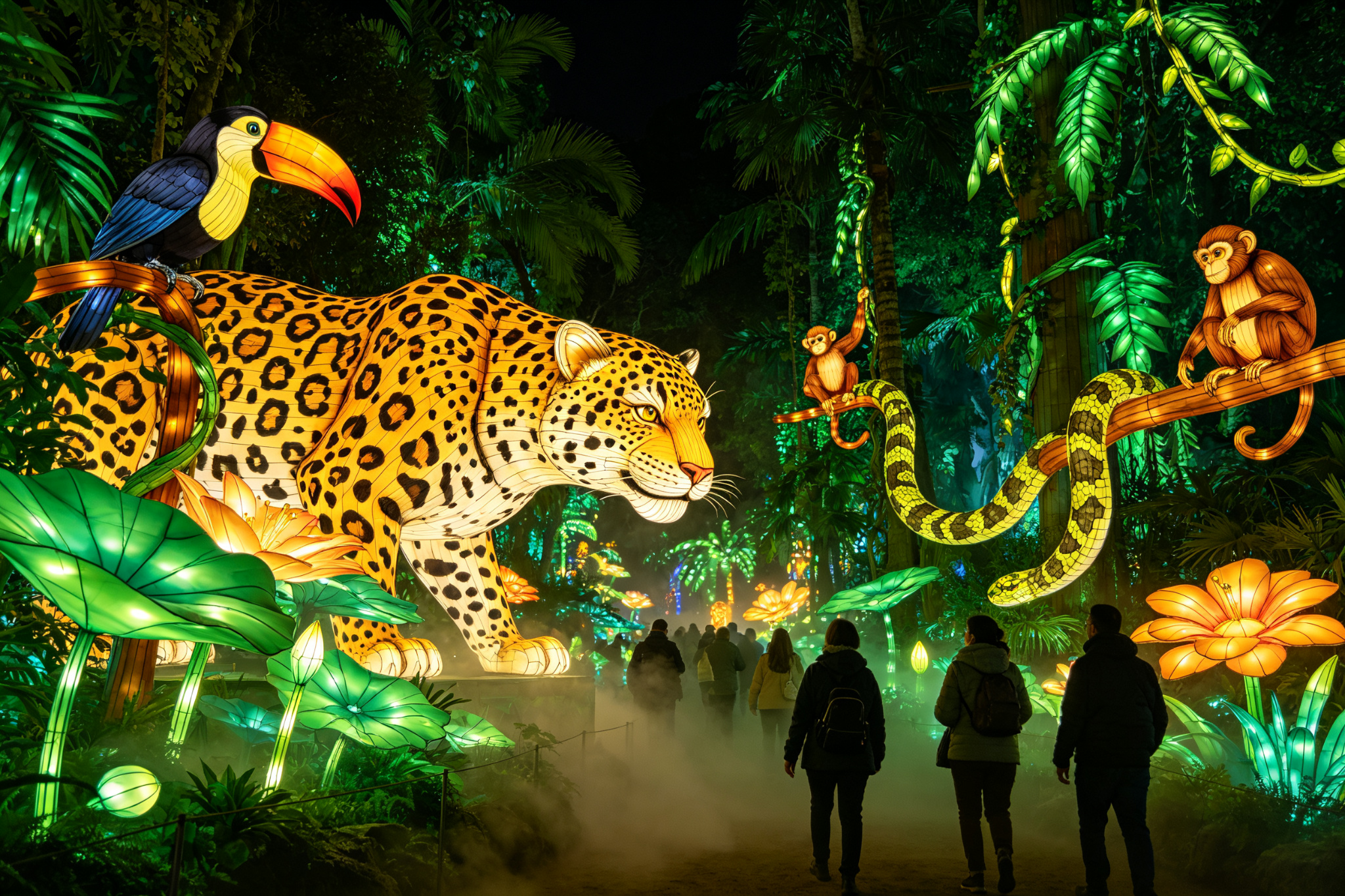
Successful international lantern festival projects balance authentic Chinese craftsmanship with cultural adaptation that resonates with local audiences. The most popular festivals blend traditional Chinese themes (dragons, phoenixes, lotus flowers) with locally relevant content — for example, incorporating native wildlife, historical figures, or popular cultural icons into the lantern design lineup. This hybrid approach honors the Chinese craft tradition while creating connections that make the event feel relevant and accessible to local visitors. Our design team researches each destination's cultural context and proposes themes that bridge Chinese and local aesthetics.
Language and communication adaptation extends beyond translation. All signage, audio guides, marketing materials, and staff uniforms should be in the local language, with Chinese characters included where appropriate as decorative elements. Food offerings should combine traditional Chinese festival foods (tanghulu, dumplings, tea) with local favorites to cater to diverse palates. Entertainment programming can include Chinese cultural performances (dragon dances, acrobatics, traditional music) alongside local artists and performers, creating a multicultural experience that appeals to broad audiences. We work with local event partners to ensure every aspect of the festival feels welcoming and appropriate for the cultural context.
Community engagement builds long-term support for international lantern festivals. Outreach to local schools, cultural organizations, and community groups before the event generates awareness and goodwill. Offering educational programs — such as lantern-making workshops, cultural talks, and school group visits with discounted rates — positions the festival as a cultural enrichment opportunity rather than purely entertainment. Many successful international festivals report that community engagement programs increase attendance by 15-25% and generate positive media coverage that reduces marketing costs. Building relationships with local cultural institutions can also lead to co-promotion opportunities and shared audience development that benefits both parties.
Expert Q&A
Q: What are the biggest challenges in international lantern festival projects?
A: The most common challenges are customs clearance (especially for wooden packaging and electrical components), visa processing for installation crews, and adapting to local electrical and building codes. An experienced international project manager anticipates these issues and prepares documentation weeks in advance. We have successfully navigated these processes in 30+ countries.
Q: How far in advance should I plan an international lantern festival?
A: We recommend beginning planning 6-9 months before your desired opening date. This allows 2-3 months for design and permitting, 2-3 months for production, 1-2 months for shipping, and 1 month for installation and testing. Starting early also provides buffer for unexpected delays and ensures you get the best production scheduling.
Q: Do you handle import duties and taxes for international shipments?
A: We can ship on various terms including DDP (Delivered Duty Paid), where we handle all import duties and taxes, or FOB/CIF where the client handles clearance. DDP is often preferred for first-time importers as it provides a single, all-inclusive price. We'll recommend the best shipping terms based on your country's regulations and your experience with imports.
Conclusion
Finding and Managing Local Partners for International Lantern Projects represents a significant opportunity for event organizers, cities, and businesses to create memorable experiences that drive engagement and revenue. By following the principles outlined in this guide and partnering with an experienced manufacturer, you can achieve exceptional results.
Zigong Sun Culture has been a trusted lantern festival manufacturer for over 15 years, serving clients across North America, Europe, Asia, and the Middle East. Contact us today to discuss your project and receive a free consultation and quote.
Practical Insights and Expert Recommendations
Successful lantern festivals balance visual spectacle with operational practicality. The most attended festivals allocate 60% of budget to lantern production and 40% to operations, marketing, and guest experience. Crowd flow design is critical: pathways should be minimum 3 meters wide, with resting areas, food zones, and restrooms distributed evenly throughout the venue. We provide complete layout planning services including visitor flow simulation, capacity calculations, and accessibility compliance to ensure a safe, enjoyable experience for all attendees.
Weather contingency planning is essential for outdoor lantern festivals. Rain can reduce attendance by 30-50% on affected nights, while high winds may require temporary closure for safety. Successful festivals build 2-3 buffer days into the schedule, offer rain-check tickets for inclement weather, and design displays with weather-resistant materials. We recommend purchasing event cancellation insurance for festivals over $200,000 in budget, and designing at least 30% of displays in covered or semi-covered areas to provide visitor options during inclement weather.
About the Author
Zhang Lei - Senior Design Director
With over 15 years of experience in lantern design and light art, Zhang Lei has led creative direction for 200+ international lantern festival projects across 30+ countries.
Frequently Asked Questions
Q: What are the key considerations for finding and managing local partners for international lantern projects?
A: The key considerations include thorough planning, quality sourcing, proper installation, and ongoing maintenance. Each project requires careful assessment of site conditions, budget constraints, and timeline requirements.
Q: How much does a typical project related to finding and managing local partners for cost?
A: Costs vary significantly based on scale, complexity, and location. Projects typically range from $5,000 for small installations to $500,000+ for large-scale festivals. We provide detailed quotes after initial consultation.
Q: What is the timeline for implementing finding and managing local partners for ?
A: Most projects require 3-9 months from initial concept to completion. Smaller projects can be delivered in 6-8 weeks, while large-scale festivals typically need 6-9 months for design, production, and installation.
Budget planning should account for the full project lifecycle, not just initial production costs. Typical breakdown: design and engineering (8-12%), production and materials (45-55%), crating and shipping (10-15%), installation and labor (10-15%), permits and insurance (3-5%), marketing and promotion (5-8%), and contingency reserve (5-10%). Underestimating shipping or installation costs is the most common budget overrun cause. Always request all-inclusive quotes that cover every cost category, and build a 10% contingency into your budget for unexpected expenses. We provide transparent, itemized quotes with no hidden fees, and our project managers help clients optimize budgets without compromising quality or visual impact.
Project timeline management is critical for event-based installations where deadlines are immovable. Build buffer time into every phase: allow 2 weeks for design revisions, 1 week for production delays, 1 week for shipping variability, and 1 week for installation contingencies. This 5-week buffer ensures that even with unexpected issues, your project opens on schedule. Communicate timeline expectations clearly to all stakeholders and establish weekly check-in meetings during production to track progress against milestones. We provide detailed Gantt charts for every project with clear milestones, deliverable dates, and client approval checkpoints, ensuring full transparency throughout the production process.
Ready to Start Your Project?
Contact Zigong Sun Culture for a free consultation and custom quote.
Get in Touch